


If your family is asking whether hostel life in Vietnam is manageable, the short answer is yes—but the right choice depends on the room arrangement, distance from teaching hospitals, food access, supervision and the written cost sheet, not on a brochure photograph. For 2026 applicants, discuss those five points with the university before confirming admission.
This guide covers the practical side of six years abroad: where a student may stay, what expenses to plan, how families can think about safety, and what to verify before travel. For the academic and licensing side, read the MBBS in Vietnam eligibility guide and NMC validity explainer.
What hostel accommodation usually includes
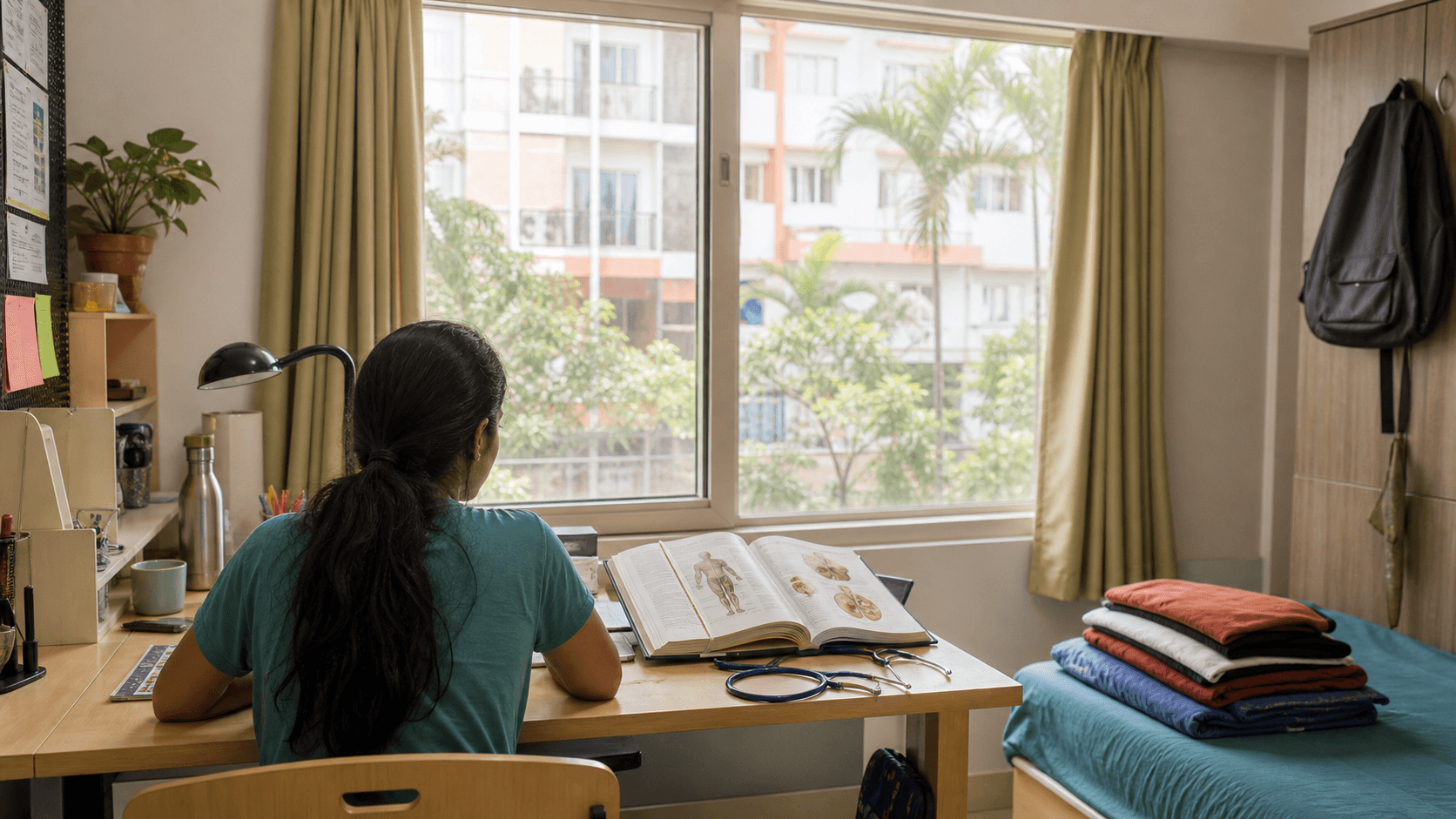
Hostel is not a single standard product across Vietnam. Depending on the university, it may mean a campus dormitory, a university-arranged residence or a nearby student building. Ask for the following in the offer pack:
| Item to confirm | Why it matters |
|---|---|
| Room sharing | A two-person room and a four-person room affect privacy, price and study time. |
| Bathroom and kitchen | Check whether they are attached, shared on the floor or unavailable. |
| Electricity, water and Wi-Fi | Ask whether these are included, capped or billed separately. |
| Security and access | Confirm entry hours, visitor rules, warden contact and emergency procedure. |
| Distance and transport | A lower rent is less useful if daily travel to classes or hospitals is difficult. |
| Deposit and refund terms | Get the amount, payment date, deductions and refund timeline in writing. |
The site’s current university data lists Phan Chau Trinh University in Da Nang with an indicative hostel range of $2,400-$2,750 per year depending on room sharing. For Can Tho University of Medicine and Pharmacy, the current listing says to contact the university for hostel rates. Treat both as intake-specific working figures, not a permanent price list. The fee should be reconfirmed with the university admissions office before payment.
A sensible living-cost budget
Families often ask for one monthly number. That can be misleading because hostel, food and transport arrangements differ. Build a budget in categories instead:
- Accommodation: hostel fee, deposit, utilities and any maintenance charge.
- Food: hostel meals, groceries, campus meals, occasional Indian food and drinking water.
- Local travel: daily campus or hospital travel, airport transfer and occasional inter-city travel.
- Study supplies: stationery, lab coat, shoes, printing, internet and basic equipment.
- Health and personal care: medicines, doctor visits, toiletries, laundry and phone plan.
- Contingency: a separate reserve for a delayed remittance, replacement document or urgent travel.
Do not combine these with tuition. The MBBS in Vietnam fee breakdown explains the academic charges; your counselling sheet should show tuition, hostel and living costs separately. Also ask whether the quoted fee is in US dollars or Vietnamese dong, which exchange rate is used, and whether bank charges are extra.
Food and daily student life
Vietnamese food is built around rice, noodles, vegetables, eggs, seafood and meat. Many Indian students find the rice and vegetable base familiar, but taste, sauces and cooking methods differ. A student who is vegetarian, Jain, allergic to nuts or following a medical diet should plan before arrival rather than assume every hostel can adapt.
Useful questions include:
- Is there a kitchen, induction facility or shared refrigerator?
- Are hostel meals compulsory or optional?
- Can students buy groceries near campus?
- Is drinking water filtered or does the student need to arrange it?
- Who helps when a student is ill or cannot communicate with a local shop?
Student life normally combines classes, practical sessions, hospital exposure, hostel routines and peer support. Indian student communities can make the first months easier, but a student should still develop independence: learn essential local phrases, keep copies of documents and understand how to reach the campus clinic and teaching hospital.
Safety: the practical checklist for parents
Safety is best assessed through procedures, not a country-level slogan. Before departure, ask the university or admissions team for:
- the hostel’s full address and a named emergency contact;
- the route and transport plan between hostel, campus and hospitals;
- visitor, curfew and room-change rules;
- the process for reporting illness, harassment, lost documents or a dispute;
- the nearest hospital, police station and Indian diplomatic contact details;
- the plan for passport custody, visa renewals and temporary residence registration.
Road traffic deserves special attention. Students should use a helmet on a motorbike only if legally permitted and properly trained, prefer authorised transport, cross carefully and avoid riding after drinking. Keep valuables discreet, use a secure phone lock and share travel plans for late journeys. These are ordinary precautions, but they matter more when a student is living abroad for the first time.
The National Medical Commission has also warned students to investigate foreign institutions carefully, including course duration, medium of instruction, curriculum, clinical training and internship arrangements. A safe hostel cannot compensate for a course that does not meet the licensing pathway requirements.
Visa and document discipline
Vietnam’s Immigration Department is the correct source for current entry and visa rules. Its official portal states that visa options, electronic applications, fees and permitted stays are managed through the immigration system, and that India is on the e-visa country list. A long-term medical student should not treat this as permission to study for six years on a short tourist entry.
Before travel, keep both paper and encrypted digital copies of:
- passport and admission or invitation documents;
- fee receipt and hostel confirmation;
- insurance details and prescriptions;
- emergency contacts and university address;
- passport photographs and academic certificates.
Ask who submits any education-related sponsorship or temporary-residence paperwork, when the student must report to the university, and who handles renewals. Immigration instructions can change; a dated checklist from the university is more useful than a generic social-media post.
A parent’s pre-payment checklist
Use this short checklist in the counselling call or university meeting:
- I have the current tuition and hostel quote for my intake.
- The university has explained what is included and excluded.
- I have seen the accommodation type, sharing and refund terms in writing.
- I know the route to classes and clinical training sites.
- I have asked how illness, emergencies and complaints are handled.
- I understand the course length, English-medium structure, clinical training and internship.
- I know which visa and temporary-residence steps apply to this student.
- I have a realistic reserve for food, travel, health and exchange-rate movement.
If any box is unanswered, pause the payment conversation and ask for clarification.
What to verify for 2026-27
This article is dated 10 July 2026. Hostel availability, room rates, exchange rates, visa instructions, university schedules and intake documents can change. The NMC’s current FMGL material should be read alongside the university’s written curriculum and clinical-training documents. Vietnam immigration details should be checked on the official portal immediately before travel. University-specific hostel and fee figures should be reconfirmed for the student’s intake.
If you want help comparing a student’s marks, budget and preferred city, use the site’s admission process guide and request a free counselling session through the existing contact route. You can also message the admissions team through WhatsApp from the site’s counselling flow; keep the discussion focused on documents, fees, accommodation and the licensing pathway.