


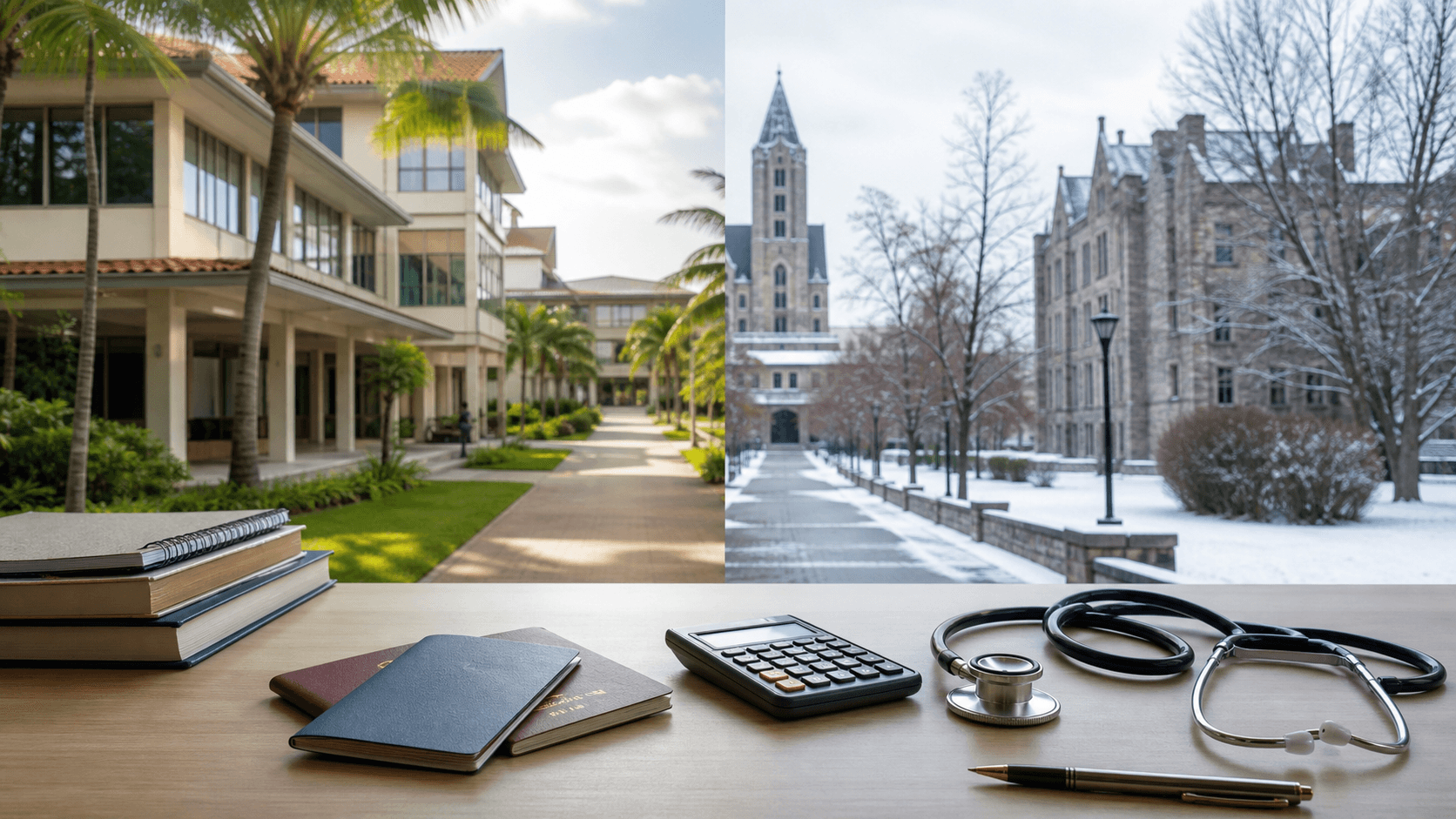
The parent-level answer is simple: Russia is usually the lower-tuition option on the site's indicative comparison, while Vietnam can be the more manageable fit for families prioritising a warmer climate, a smaller partner-university shortlist and English-first study arrangements. Neither country is automatically safer for every student, and neither removes the NMC, clinical-training or licensing checks.
At-a-glance comparison
| Decision factor | Vietnam | Russia |
|---|---|---|
| Indicative six-year tuition | $24,606–$39,350 | $21,200–$28,200 |
| Indicative Indian student community | 1,000+ across the partner network | 15,000+ directionally in the comparison data |
| Climate | Tropical; generally warm | Continental; cold winters in many cities |
| Admission shape | Direct university admission across the partner shortlist | Direct/merit routes vary by university |
| Main parent task | Confirm each university's clinical and internship documents | Verify the specific university, language support, fees, banking and current local conditions |
| India pathway | Applicable NMC rules and licensing route | Applicable NMC rules and licensing route |
The figures are directional. Vietnam's range is tuition from the site's published 2026 partner schedules; Russia's range is a comparison estimate. Neither table is a complete cost-of-attendance quote.
Cost: lower tuition is not the same as lower risk
Russia's indicative tuition range is lower, but the family should price the entire six years: accommodation, meals, local transport, flights, insurance, visa or residence formalities, currency conversion and any language support. Payment logistics can matter as much as the advertised fee, so ask how tuition is paid, what happens if a transfer fails and which account receives it.
Vietnam's current partner tuition is higher at some universities, but the fee schedules are available in the site's university fee comparison. Add hostel and one-time costs rather than comparing only the first-year figure. The Vietnam fee guide explains flat versus escalating tuition models.
For both countries, request a written estimate with:
- all six years of tuition and the currency used;
- hostel, deposit, meals and utilities;
- visa, residence, insurance and document costs;
- flights and realistic annual travel assumptions;
- refund terms and the consequence of a delayed or refused visa.
Do not treat the dollar figure as a guaranteed rupee cost. The exchange rate may move between the offer letter and each instalment, and families may pay for flights or documentation at different points in the year. Build a base budget plus a contingency for currency movement, an extra trip home, winter clothing where relevant, health costs and a delayed arrival. Ask whether the university bills in dollars, local currency or a fixed rupee amount.
Climate, language and daily independence
Climate is not a cosmetic issue for a 17- or 18-year-old living abroad. Vietnam's partner cities are tropical or warm for most of the year. Russia covers a much larger geography, so the actual winter, transport and daylight experience depends heavily on the selected city.
Language also needs a university-level answer. English-medium teaching should be documented for either country, but patient interaction and everyday services may require the local language. Ask whether the medical programme teaches Vietnamese or Russian, how clinical supervisors communicate, and what happens when a patient cannot speak English.
Russia's larger Indian community can be useful for peer support, food and settling in. It can also make a family less careful about the individual university. A large Indian cohort is not proof of recognition, clinical quality or licensing success. Vietnam's smaller partner network may make shortlisting simpler, but parents must still inspect each university's documents.
The student's own preferences should be part of the decision. A child who has never lived away from home may value a predictable hostel, airport pickup, Indian food access and an active local support contact more than a small tuition saving. A student comfortable with cold weather and a different language environment may consider more Russian cities, but should still ask how the medical faculty handles patient communication.
Recognition and NMC due diligence are country-neutral
The Indian Ministry of External Affairs advises students going abroad to check that the foreign university is accredited and recognised, understand local rules and living conditions, and contact the Indian mission where helpful. The Indian Embassy in Moscow's student guidance specifically provides links on admission, medium of instruction, payment, hostel, immigration and a checklist for Indian students in Russian medical institutions.
For Vietnam or Russia, complete these checks before paying:
- Search the exact medical school and programme in WDOMS.
- Confirm recognition by the competent authority in the country awarding the degree.
- Read the current NMC FMGL FAQ and applicable regulations.
- Ask for proof of at least the required course duration, English instruction, prescribed subjects, clinical postings and the same-institution internship arrangement.
- Get the university—not only a consultant—to confirm the documents in writing.
Clinical training is especially important. The Vietnam clinical-training guide explains the questions to ask about departments, teaching hospitals, logbooks and supervision. Apply the same checklist to Russia.
Safety and support: make it specific
Avoid reducing safety to a country score. Ask the university for the hostel address, wardens, emergency number, nearest hospital, transport after dark and the process for reporting harassment or illness. Check whether the institution helps students with registration, residence renewals and emergency communication.
For Russia, read the latest Indian Embassy student guidance and the MEA FAQ for Indian students abroad. The Embassy's medical-education advisory tells prospective students to read NMC guidance and check university prerequisites directly. Current conditions affecting travel, payments, visas or consular support should be rechecked before departure and throughout the course.
For Vietnam, use the official Vietnam Immigration e-visa portal only for current immigration information. The portal says e-visas can be issued for up to 90 days, but a long-term student needs the university's correct study and residence process rather than treating a short entry visa as the complete solution.
Which family profile may fit which option?
| If the family prioritises… | Start by investigating… |
|---|---|
| Lowest indicative tuition | Russia, with payment, language and university-level checks |
| Warm climate and easier climate adjustment | Vietnam's university cities and hostel arrangements |
| A large Indian peer network | Russia's specific university and city, not only country totals |
| A smaller, curated university shortlist | Vietnam's seven partner profiles and written clinical documents |
| A future India licensing route | Either country, but only after a full NMC and WDOMS review |
This is a starting point, not a verdict. A student who dislikes cold weather may struggle in a low-fee Russian city; a student who needs the lowest budget may not be able to justify a higher Vietnam tuition; a student who expects English to solve every clinical interaction needs a language plan in either country.
A practical parent scorecard
Before the counselling call, score each shortlisted university from 1 to 5 on six separate questions: written fee clarity, NMC-document readiness, clinical-training evidence, hostel and emergency support, language plan, and travel/payment practicality. Do not combine the scores into a fake “best country” ranking. Use them to expose missing information. If Russia wins on fee but cannot answer payment or clinical questions, or Vietnam wins on climate but the family has not confirmed the complete budget, the next step is evidence gathering—not a deposit.
Dated limitation note
Checked 11 July 2026. Tuition estimates, exchange rates, flight routes, visa processes, university affiliations, local conditions, Indian-student counts and NMC requirements can change. Russia figures and student counts in this article are directional comparison data, not an official national census. Reconfirm the selected university, complete cost, travel and regulatory position before payment.
If you want help comparing a student's marks, budget and preferred climate or city, begin with the site's country comparison page and eligibility guide, then use the contact route or WhatsApp counselling flow. Ask for a written two-country budget and university due-diligence checklist rather than a verbal promise.