


For most Indian students, the safest plan is to treat the Vietnam MBBS visa as a university-coordinated process with three stages: obtain the correct entry permission, arrive with a complete document folder, and convert or extend the permission as instructed for the full course. Vietnam's official immigration portal says its e-visa is valid for a maximum of 90 days, single or multiple entry; that is an arrival document, not automatically a six-year study solution.
Vietnam MBBS visa: the short answer
Before booking a flight, ask the chosen university to confirm these points in writing:
| Question | Why it matters |
|---|---|
| Which visa or entry route applies to this intake? | A short e-visa and a long-term study arrangement are not the same thing |
| Does the university issue an invitation or guarantee letter? | The responsible sponsor or requesting organisation must be clear |
| Who submits each application? | Avoid missed deadlines between student, agent and university |
| What is the permitted stay after arrival? | It affects extension and residence planning |
| Who declares temporary residence? | Foreign students need a compliant Vietnamese address record |
| What happens if the flight or intake date changes? | Visa dates and entry points must match the actual trip |
Use the site's MBBS in Vietnam admission process, eligibility guide and university profiles as planning references. The university's current written instructions control the final application.
1. Start with the official immigration portal
Vietnam's Immigration Department states that foreigners outside Vietnam may personally apply for an e-visa or apply through a requesting agency or organisation. Its portal describes the e-visa as single or multiple entry, valid for no more than 90 days. The portal also publishes the application steps, passport and photograph uploads, online payment and an indicative three-working-day processing time.
The same official notice says the portal moved to evisa.gov.vn and thithucdientu.gov.vn from 11 November 2024. Save the current official link rather than using a lookalike website found through an advertisement.
The student should check the following before submitting:
- passport number, name spelling and date of birth exactly match the passport;
- passport validity meets the current immigration requirement;
- intended entry date and entry checkpoint match the flight;
- the Vietnamese address is the actual first accommodation or university-approved address;
- the visa type, number of entries and permitted stay match the university's instructions;
- the application reference, payment receipt and approval PDF are stored in two places.
An application fee may not be refunded if the application is refused. Do not treat a three-working-day processing statement as a guarantee for a particular case or travel date.
2. Ask the university about the study route
An MBBS offer is not complete until the institution explains the immigration workflow. Ask for the international office's official email and request a one-page checklist that names the visa category or permission, sponsor, documents, fee, processing sequence and extension point.
For a six-year programme, clarify whether the student:
- enters on a short e-visa and completes a university-supported change or extension;
- receives an invitation or sponsored visa document before travel;
- must leave Vietnam to obtain a new visa at a defined stage; or
- follows another route prescribed by the university and immigration authorities.
Do not infer the answer from another university's brochure. The correct procedure can depend on the institution, programme, nationality, entry date and current Vietnamese rules.
3. Prepare one document folder
Keep originals in hand luggage and scanned copies in a secure cloud folder. A typical university-facing folder may include:
- passport and passport photographs;
- Class 10 and Class 12 certificates and marksheets;
- admission letter, fee invoice and scholarship terms if applicable;
- invitation, sponsor or immigration letter supplied by the university;
- medical certificate, insurance evidence and vaccination records if requested;
- authenticated, translated or notarised copies where the university requires them;
- accommodation confirmation, campus address and emergency contact;
- flight itinerary and parent or guardian contact details;
- payment receipts and the university's refund policy.
Ask whether Indian documents must be apostilled, consular-legalised, translated into Vietnamese or submitted only after arrival. Keep a checklist signed off by the university; a generic agent list is not enough.
4. Plan arrival day and temporary residence
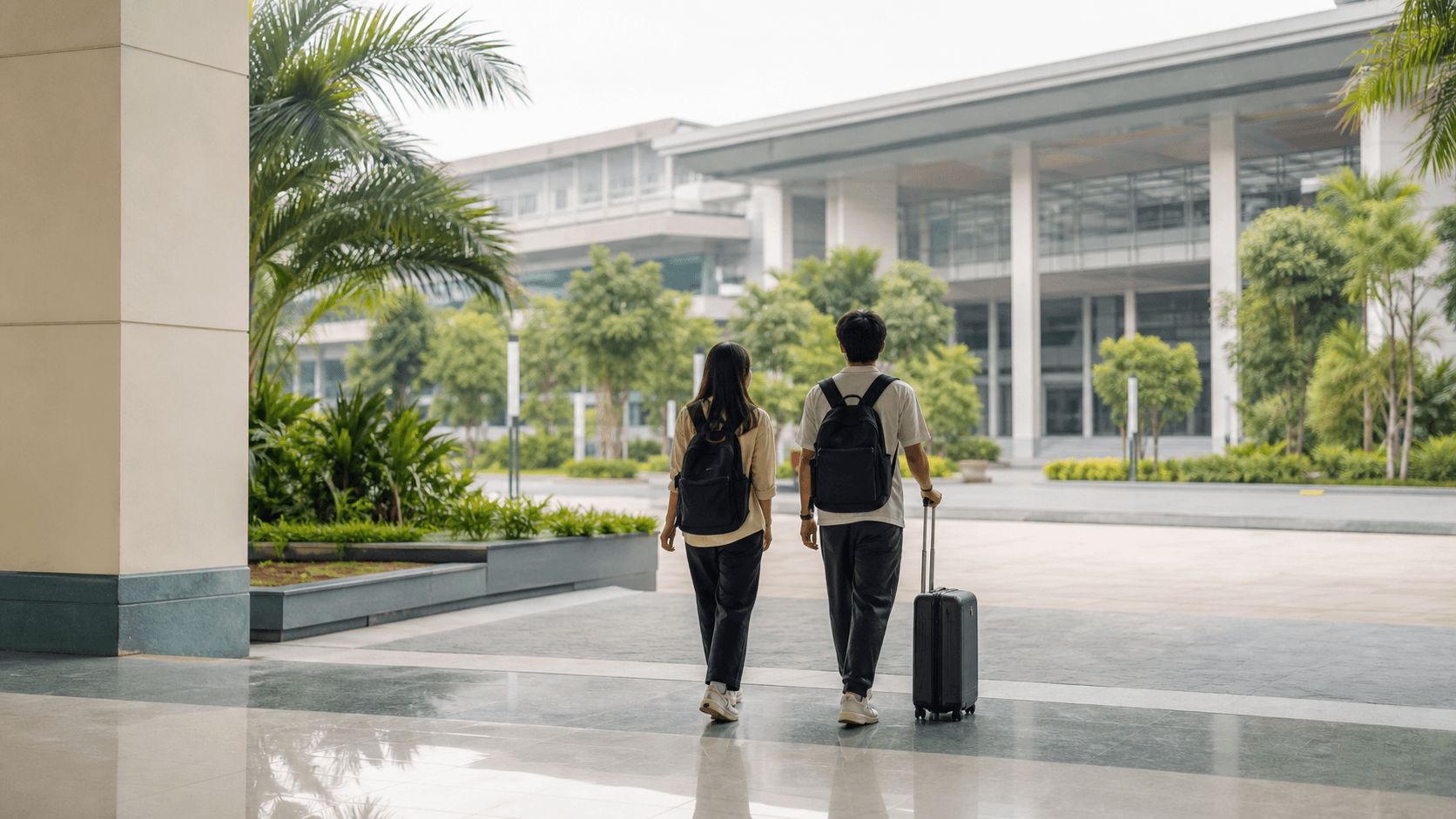
At the airport, carry the printed approval or e-visa, passport, admission letter, accommodation address and the university contact who will receive the student. Do not put all documents in checked luggage. Confirm whether airport pickup is arranged, what the emergency fallback is and which local number works after landing.
After check-in, ask who declares temporary residence with the local authority or through the accommodation provider. The student should receive confirmation of the recorded address and understand what changes require a new declaration. This is especially important when moving from a temporary hotel to a hostel or rented room.
Before accepting hostel accommodation, verify room occupancy, deposit, utilities, meals, curfew, visitor rules, security, distance to teaching buildings and transport to hospitals. The site's hostel, living-cost and safety guide covers the questions to ask without inventing a universal hostel price.
5. Link visa planning to NMC due diligence
Visa approval does not confirm that a medical degree is suitable for Indian registration. NMC's current FMGL FAQ says the course leading to a foreign medical degree must meet specified duration and English-medium requirements and include theory, practical and clinical training. The rules and the student's admission date matter.
Ask the university to provide the curriculum, clinical schedule, internship or practical-training document, language arrangement and degree title. Check the university in WDOMS but remember that WDOMS is a directory, not an Indian registration decision. Read the current NMC rules and regulations before making a payment.
Arrival checklist for parents
- Confirm visa route, sponsor and extension plan in writing.
- Verify the official university email and payment beneficiary.
- Match visa dates and entry checkpoint to the flight.
- Save passport, visa, admission and insurance copies offline.
- Confirm airport pickup, hostel address and emergency contact.
- Ask who declares temporary residence and when.
- Obtain the clinical, language and internship documents.
- Re-check NMC rules for the student's admission year.
Use the site's contact route or [WhatsApp counselling flow](https://wa.me/919344141424?text=Hi%2C%20I%20want%20to verify the Vietnam MBBS visa route%2C arrival checklist%2C hostel and university documents.) for an intake-specific document review. Counselling can help organise questions; it cannot guarantee a visa, admission or future Indian registration.
Limitations note — checked 23 July 2026
Visa validity, fees, portals, entry checkpoints, residence procedures, university sponsorship, flight requirements, health checks, exchange rates and NMC guidance can change. This guide uses the Vietnam Immigration Department portal, current NMC materials and the site's university/admission data checked on 23 July 2026. Reconfirm the exact visa route and documents with the university and official immigration portal before booking travel.